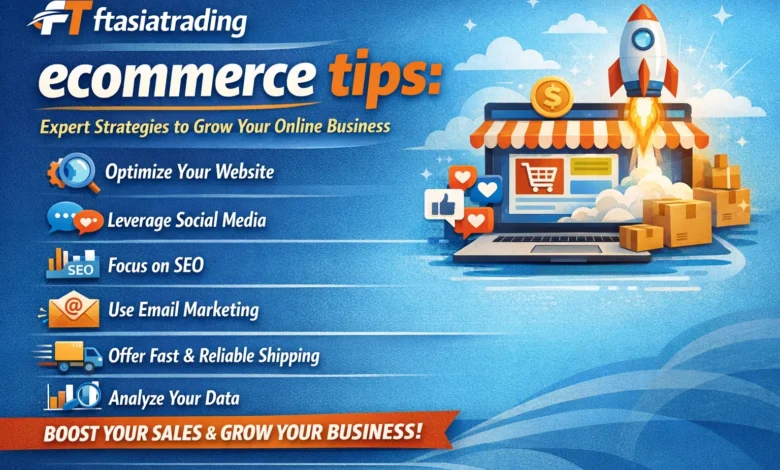
In the ever-evolving world of online business, understanding how to thrive in ecommerce is crucial. Whether you’re just getting started or looking to scale, mastering the right strategies can mean the difference between modest sales and explosive growth. This guide dives deep into ftasiatrading ecommerce tips that are valuable, practical, and designed to help your store succeed in a competitive landscape.
Ecommerce isn’t just about having products online. It’s about creating an experience, optimizing every touchpoint, and using smart marketing to turn visitors into loyal buyers. Today, successful online merchants blend creativity with analytics, customer-first mindset with business strategy, and innovation with solid fundamentals. This article equips you with knowledge across branding, traffic growth, conversion, customer retention, and scaling—everything modern merchants need to succeed.
By the time you finish this comprehensive guide, you’ll have a clear roadmap for boosting your online store’s performance with actionable ftasiatrading ecommerce tips you can implement right away.
Understanding the Ecommerce Landscape
First, it’s important to understand the broader context of ecommerce before applying specific strategies. Ecommerce has exploded over the past decade, with billions of shoppers worldwide purchasing online. This rapid growth means competition is fierce, but it also means countless opportunities for sellers who know how to position themselves smartly.
Online shoppers are more informed, connected, and demanding than ever. They expect fast-loading sites, mobile-optimized experiences, transparent pricing, and reliable support. Shoppers compare options instantly and leave brands that don’t meet their expectations. In response, merchants must focus on building trust and delivering value.
Another key trend in ecommerce is personalization. Modern consumers want curated experiences tailored to their interests. Brands that listen to customers, leverage data, and personalize recommendations tend to outperform their competitors. These are key ftasiatrading ecommerce tips you’ll apply throughout this guide—thinking deeply about customers, not just transactions.
Understanding your audience and their purchasing behavior sets the foundation for everything else you’ll build. Instead of guessing what your customers want, use data analytics, feedback, and testing to shape your strategies continuously.
Crafting a Winning Brand Identity
Branding is more than a logo or a color scheme. Your brand is what your audience perceives when they think about your business. It’s the feeling you evoke, the trust you build, and the story you tell. Strong branding makes your ecommerce business memorable and drives long-term loyalty.
Start by defining your unique value proposition. What makes your products or services different from competitors? Why should someone choose your store? This unique angle becomes the cornerstone of your messaging, design, and customer experience.
Consistency is key. Every element of your brand—visuals, tone, product descriptions, customer support, packaging—should reflect your values and voice. Customers notice when a brand feels cohesive and professional.
One important ftasiatrading ecommerce tip is to create a brand style guide. This should include your logo usage rules, color palette, typography, tone of voice, and messaging principles. With a style guide, you ensure consistency across all channels and prevent mixed signals that can dilute your brand identity.
A memorable brand not only helps you attract customers but encourages repeat purchases and positive word-of-mouth referrals—two powerful drivers of sustainable ecommerce growth.
Building a High-Converting Store
A beautiful store isn’t enough if it doesn’t convert visitors into buyers. Conversion rate optimization (CRO) is critical for revenue growth. Your website must be intuitive, fast, and tailored to your audience’s needs.
Start with user-friendly navigation. Shoppers should easily find what they’re looking for without frustration. Clear categories, filters, and search functionality improve user experience and reduce bounce rates. Every step in the journey should feel effortless.
Speed matters. Studies show that slow-loading pages lead to higher abandonment rates. Optimize images, use fast hosting, and consider a content delivery network (CDN) to ensure quick page loads across regions. Mobile performance is equally important—more than half of online purchases now occur on mobile devices.
Another key ftasiatrading ecommerce tip involves product pages. Each product page should include:
- High-quality images from multiple angles
- Informative and benefit-focused descriptions
- Price clarity
- Trust indicators like reviews and ratings
- Clear Add to Cart buttons
Adding urgency elements, such as low stock alerts or time-limited offers, can encourage faster decisions without feeling pushy.
Checkout optimization is another essential aspect. Friction during checkout—such as unexpected fees or lengthy forms—can cause cart abandonment. Streamline the process by offering guest checkout, multiple payment options, and clear progress indicators. Transparency about shipping, taxes, and return policies increases trust and reduces hesitation.
Putting attention on these conversion elements dramatically increases your sales without needing more traffic. This makes CRO one of the most impactful ftasiatrading ecommerce tips you can implement early.
Leveraging Analytics for Smarter Decisions
In ecommerce, gut feelings don’t drive sustainable success—data does. Analytics allows you to understand how users interact with your site, which channels perform best, where customers drop off, and what products resonate most.
Google Analytics remains a powerful tool to track traffic sources, user behavior, conversion funnels, and revenue. Set up goals and ecommerce tracking to measure key metrics like conversion rate, average order value, and customer lifetime value.
Beyond Google Analytics, heatmaps and session recordings help you see how visitors navigate pages. Tools like Hotjar or Crazy Egg can reveal usability issues you might miss otherwise. For example, if visitors repeatedly try to click a non-clickable element, that’s a signal to adjust your design.
Segment your audience based on behavior, purchase history, and demographics. Segmentation reveals patterns that single aggregate metrics hide. For instance, returning customers might convert at a much higher rate than first-time visitors, indicating the importance of loyalty incentives.
These insights empower you to make informed decisions—whether you’re testing new designs, adjusting marketing budgets, or choosing products to promote. Smart analytics usage is one of the most technically advanced yet value-rich ftasiatrading ecommerce tips available.
Driving Targeted Traffic That Converts
Traffic is the lifeblood of any online store. The more relevant visitors you attract, the higher your chances of making sales. However, not all traffic is equal. Targeted traffic—users already interested in your niche—converts better than random clicks.
Start with search engine optimization (SEO). Organic traffic remains one of the most cost-effective acquisition channels. Conduct keyword research to understand what your audience searches for online. Use tools like Ahrefs, SEMrush, or Google Keyword Planner to identify high-intent terms related to your products.
Once you have your keywords, optimize your product pages, category pages, meta titles, and descriptions. Ensure your site has a clear information hierarchy and uses LSI (latent semantic indexing) keywords naturally within descriptions to contextualize your content for search engines.
Content marketing is another powerful driver. Create blog posts that answer buyer questions, showcase product use cases, or compare options. This boosts SEO, educates buyers, and positions your brand as an authority.
Social media platforms also help you reach new audiences. The key is not just posting but engaging with followers, using relevant hashtags, and integrating user-generated content. Paid ads on platforms like Facebook, Instagram, and TikTok can scale quickly when targeted correctly.
Email marketing shouldn’t be ignored. Build your list through incentives like discounts or exclusive content. Then nurture subscribers with helpful insights, product recommendations, and promotions.
This combination of organic and paid strategies ensures a steady flow of ftasiatrading ecommerce tips traffic that is both high in volume and high in intent.
Dawn Neesom Illness: A Comprehensive, Evidence-Based Guide for Readers Seeking Clarity
Using Social Proof to Build Trust
Trust is the currency of ecommerce. When visitors aren’t physically present to see or touch products, social proof becomes a powerful tool to reassure them. Social proof includes customer reviews, testimonials, influencer endorsements, and user-generated content.
Reviews and ratings should be visible on product pages. A steady stream of positive reviews builds confidence and reduces purchase anxiety. Responding to reviews—both positive and negative—also shows you value customer feedback and care about their experience.
User-generated content (UGC), like photos or videos from real customers, adds authenticity that polished product photos sometimes can’t match. Feature this content on product pages, social media, and email campaigns.
Working with influencers expands your reach to new, engaged audiences. Choose influencers whose followers align with your target demographic. Influence-based promotions often feel more genuine than direct ads.
An important ftasiatrading ecommerce tips principle here is transparency. Encourage honest reviews, display ratings clearly, and handle negative feedback constructively. Customers respect authenticity—and are more likely to buy from brands that show real voices.
Pricing Strategies That Drive Sales
Pricing impacts both conversion and profitability. Your pricing strategy communicates value to customers and helps position your brand in the market.
Competitive pricing requires market research. Understand what similar brands charge and how your product compares in quality, features, and benefits. Pricing too low may raise doubts about quality; pricing too high without justification may scare customers away.
Psychological pricing tactics like charm pricing (e.g., $19.99 instead of $20.00) can boost conversion without significantly affecting margins. Bundling products or offering volume discounts encourages larger orders and increases average order value.
Dynamic pricing—adjusting prices based on demand, inventory, or customer behavior—can also be effective when done right. But ensure transparency to avoid customer frustration.
Clear communication around pricing is part of the ftasiatrading ecommerce tips approach. When customers understand why your price provides value, they are more likely to purchase and remain loyal.
Optimizing Mobile Experience
Mobile commerce continues to grow rapidly. Shoppers expect seamless experiences on their phones, and stores that neglect mobile optimization lose sales.
Mobile-first design prioritizes simplicity, readability, and fast performance. Buttons should be easy to tap, images optimized for quick loading, and forms simplified to reduce friction.
Navigation should adapt for mobile screens—use collapsible menus, visible search bars, and clear call-to-action buttons. Slow pages or confusing layouts frustrate mobile users, leading to higher bounce rates.
Mobile optimization also includes mobile checkout experiences. Autocomplete features, digital wallet options like Apple Pay or Google Pay, and minimal fields make mobile purchases smoother and faster.
When your store works flawlessly on mobile, you not only enhance user satisfaction but also support better rankings in search engines—since mobile-friendliness is a known ranking factor.
These optimizations are among the most practical ftasiatrading ecommerce tips for unlocking more sales in today’s mobile-first world.
Advanced Marketing Techniques
Beyond basics like SEO and social media, advanced marketing tactics help scale ecommerce growth:
- Retargeting ads bring back visitors who left without purchasing.
- Loyalty programs incentivize repeat business and referrals.
- Affiliate marketing taps into networks of partners to drive new sales.
Retargeting reminds visitors about products they viewed, reinforcing interest and improving conversion rates. Tools like Facebook Pixel or Google Ads remarketing lists power this strategy effectively.
Loyalty programs reward repeat purchases with points, discounts, or exclusive benefits. These programs increase customer lifetime value and strengthen brand affinity.
Affiliate marketing rewards third parties for driving sales. This expands your marketing reach without upfront costs. Affiliates promote your products to their audiences, earning commissions only when you make sales.
These advanced tactics reflect deeper aspects of ftasiatrading ecommerce tips that help mature businesses grow sustainably.
Customer Service as a Growth Lever
Excellent customer service sets successful ecommerce brands apart. Customers remember experiences—good or bad—and share them widely through reviews and social media.
Offer multiple channels of support like email, live chat, and social messaging. Quick response times and helpful resolutions enhance satisfaction and build loyalty.
Empower your customer service team with clear guidelines, product knowledge, and empathy. Train them to solve problems proactively and communicate transparently.
Return policies also reflect your service quality. Fair, straightforward return policies reduce hesitation at checkout and demonstrate confidence in your products.
Outstanding service not only keeps customers coming back but also turns them into advocates—a valuable form of organic promotion aligned with ftasiatrading ecommerce tips principles.
Scaling Your Ecommerce Business
Once your fundamentals are solid, scaling becomes a priority. Scaling means growing revenue without proportionally increasing costs, and it often involves diversification, automation, and partnerships.
Consider expanding your product line to complement your bestsellers. Use sales data to identify high-demand categories and customer preferences. Adding related products increases average order value and customer engagement.
International expansion opens new markets but also requires careful planning. Understand regional preferences, shipping logistics, taxes, and local competition before entering new territories.
Automation tools help streamline operations. Automate inventory updates, email campaigns, and order tracking notifications to reduce manual workload and free up time for strategy.
Partnerships with marketplaces like Amazon or regional ecommerce platforms can boost visibility and sales volume. These channels often have built-in traffic and brand trust, which can elevate your reach.
Each scaling decision should be grounded in solid data and aligned with your brand identity—consistent themes in all effective ftasiatrading ecommerce tips.
Essential Tools and Technologies
The right tools make implementation seamless. Some categories every ecommerce store benefits from:
| Tool Category | Examples | Purpose |
|---|---|---|
| Analytics | Google Analytics, Hotjar | Understand traffic and behavior |
| SEO | Ahrefs, SEMrush | Keyword research and ranking |
| Email Marketing | Klaviyo, Mailchimp | Nurture customers and boost retention |
| CRM | HubSpot | Manage customer relationships |
| Payment Gateways | Stripe, PayPal | Secure and flexible checkout |
| Inventory | TradeGecko, Zoho | Track stock and suppliers |
| Chat & Support | Zendesk, Intercom | Customer communication |
Using the right tools not only improves efficiency but provides insights that guide smarter decisions. They support every stage of growth and are a central part of professional ftasiatrading ecommerce tips.
Stories From Successful Ecommerce Leaders
“Growth in ecommerce isn’t about luck—it’s about listening to your data and your customers,” says one leading ecommerce entrepreneur who scaled their brand from zero to multiple seven figures. Their success came from consistent testing, early investment in analytics, and relentless focus on customer experience.
Another ecommerce leader noted, “Your first sale is just the beginning. The real work starts when you learn how to retain and delight your customers.” This sentiment echoes a core truth: repeat buyers often outpace new customers in long-term value.
These insights from seasoned practitioners reinforce that ecommerce success is both strategic and human-centered.
Conclusion
Growing a thriving ecommerce business requires more than a storefront—it demands smart planning, consistent execution, and a deep understanding of customers. From branding and conversion optimization to analytics, marketing, and scaling, the ftasiatrading ecommerce tips shared here equip you with a comprehensive playbook for success.
Every strategy works best when adapted to your unique audience and goals. Use these tips as a foundation for experimentation, learning, and refinement. Ecommerce is both an art and a science—and mastering it leads to sustainable growth, loyal customers, and lasting impact.
FAQ
How can ftasiatrading ecommerce tips help my online store grow?
ftasiatrading ecommerce tips focus on actionable strategies—from improving conversion to boosting traffic—that help your store attract more visitors, increase sales, and build customer loyalty. They bring together practical insights backed by data and real-world experience.
What is the most important ecommerce metric to track?
Conversion rate is one of the most important metrics because it directly measures how many visitors turn into customers. However, other metrics like average order value and customer lifetime value are essential for long-term growth.
How do I improve my ecommerce store’s SEO?
Improving SEO involves keyword research, optimizing product pages and metadata, creating helpful content, using LSI keywords, and improving site speed. Regularly updating content and building backlinks also boosts search visibility.
Why does social proof matter in ecommerce?
Social proof builds trust. When potential customers see positive reviews, testimonials, and user-generated content, they feel more confident purchasing from your store. Trust reduces hesitation and increases conversions.
What tools should I use to manage my ecommerce business?
Essential tools include analytics platforms like Google Analytics, SEO tools like Ahrefs or SEMrush, email marketing services like Klaviyo, CRM systems, and reliable payment gateways. The right tools streamline operations and enhance performance.