The Complete Guide to MySDMC SSO: Navigating the Single Sign-On Portal for the School District of Manatee County

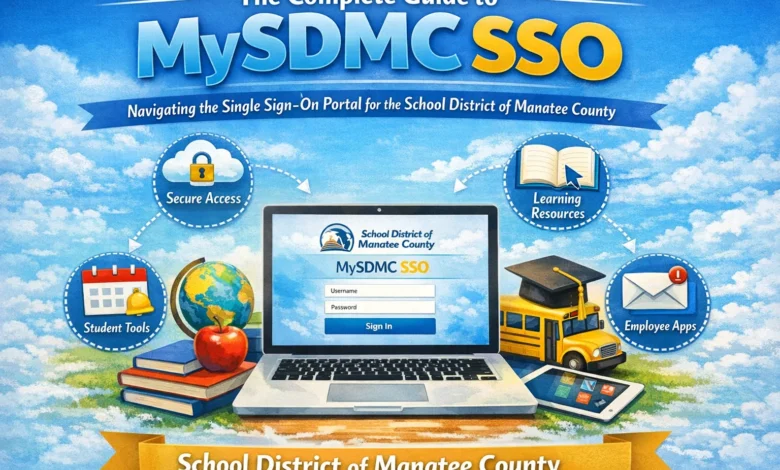
The Essential Guide to MySDMC SSO: Unlocking a Unified Digital Education Experience
This guide explains everything you need to know about the MySDMC SSO portal—from its foundational role as a single sign-on gateway to its practical, day-to-day use for students, teachers, and staff within the School District of Manatee County. This resource helps readers navigate the platform confidently, resolve common access issues, and leverage its integrated suite of educational tools to support learning and administration. We’ll move from a clear understanding of what the system is to strategic advice for getting the most from this centralized digital hub.
In the modern educational landscape, a seamless digital experience is not a luxury; it is a necessity. For the School District of Manatee County (SDMC), this necessity is addressed through a critical piece of technology infrastructure: the MySDMC SSO portal. At its core, this system is a single sign-on solution, a digital master key designed to streamline access to the myriad applications and resources that fuel daily educational operations. For a student, it might be the gateway to their learning management system, email, and digital textbooks. For a teacher, it could provide one-click entry to gradebooks, student information systems, and professional development tools. For parents and guardians, it represents a window into their child’s academic progress.
TopHillSport com: The Ultimate Hub for Sports Buzz, Fast Updates, and Smart Online Trends
The primary search intent behind queries for “MySDMC SSO” is overwhelmingly practical and informational. Users are not merely seeking a definition; they are seeking access, understanding, and resolution. They are often at a point of need—unable to log in, confused by the dashboard, or looking for a specific tool. This guide is structured to meet that intent head-on, providing not just instructions but context, strategy, and expert insight into how this portal functions as the central nervous system for SDMC’s digital ecosystem. We will demystify the login process, explore the integrated applications, address widespread user problems, and provide a framework for understanding the strategic thinking behind such a unified system. Our journey begins with the most fundamental question: what exactly is this portal, and why does its design matter so much for educational efficiency and security?
Understanding the Foundation: What is MySDMC SSO?
MySDMC SSO is the centralized authentication and access portal for the School District of Manatee County. It functions as a single sign-on (SSO) solution, meaning users log in once with one set of credentials to gain secure, seamless entry to a wide array of approved educational applications and digital resources, such as Canvas, Focus, Microsoft 365, and internal district systems, without needing to remember or enter separate passwords for each.
To grasp the full value of MySDMC SSO, one must first understand the problem it was built to solve. Imagine a teacher starting their day: before single sign-on, they might need a unique username and password for the student information system (Focus), another for the email platform (Microsoft Outlook), another for the learning management system (Canvas), and yet another for district HR portals. This creates a significant cognitive load, leads to insecure practices like password recycling, and wastes precious instructional time on login troubleshooting. The IT help desk becomes inundated with password reset requests, diverting resources from more strategic initiatives.
The SSO model elegantly solves this. It acts as a trusted intermediary. When you log into the MySDMC SSO portal, you authenticate yourself to a central identity provider. This provider then securely communicates your verified identity to the other applications (known as service providers) you wish to access. You’ve done the hard work once; the system handles the rest. This is more than a convenience—it’s a foundational shift in user experience and security posture. It allows the district to enforce stronger password policies centrally, manage user lifecycles (like instantly revoking all access when a student graduates or an employee leaves), and gain visibility into application usage.
From a historical perspective, the adoption of systems like MySDMC SSO represents a natural evolution in educational technology. Schools have progressed from isolated computer labs with standalone software to networked environments, and now to cloud-based ecosystems. This portal is the logical gateway for this cloud-first, mobile-friendly era. It reflects a modern understanding that the digital learning environment must be as cohesive and intuitive as the physical classroom. The strategic goal is to reduce friction, allowing users to focus on core tasks—learning, teaching, and collaborating—rather than on navigating technological barriers.
The core idea of MySDMC SSO is to serve as a unified, secure gateway that simplifies access and centralizes management, turning a fragmented digital landscape into a cohesive and efficient educational ecosystem.
The Critical Login Process: Access, Errors, and Solutions
The login page for MySDMC SSO is the frontline of the district’s digital experience. It’s where theory meets practice, and where most user problems first manifest. A smooth login is expected; a failed login creates immediate frustration and halts productivity. Therefore, understanding the mechanics and common pitfalls of this process is essential. The typical login requires a district-issued username and password. For most students and staff, this username follows a standardized format, often a combination of first name, last name, and/or student/employee ID number.
Let’s address three real user problems that consistently arise at this stage. First, and most common, is the incorrect credentials error. Users may mistype their password, forget a username convention, or be unsure if they are using their student ID or a generated alias. Second is the account lifecycle issue. A student trying to log in during the first week of summer break may find their account temporarily suspended. A new employee may attempt access before their official start date, when their account is provisioned but not yet activated. Third is the system access error, where the portal itself may be unavailable due to scheduled maintenance, unexpected outages, or network issues within the user’s location.
Solving these requires a diagnostic approach. For credential errors, the first step should always be the “Forgot Password?” or help link on the MySDMC SSO login page. This typically triggers a reset process via district-verified email or phone. If that fails, contacting the school-based technology coordinator or the district’s IT help desk is the prescribed path. They can verify identity, reset passwords, and clarify usernames. For lifecycle issues, understanding the district’s account policies is key. There is often a synchronization period at the start and end of the school year. Patience and communication with administration are vital here. For system-wide access problems, checking the district’s official communication channels—such as its website or social media for outage alerts—can provide immediate clarity and save futile troubleshooting efforts.
In practice, a successful login to MySDMC SSO should feel instantaneous. Upon entering correct credentials, you are typically redirected to a launchpad or dashboard. This dashboard is the visual manifestation of the SSO’s power—a grid or list of application icons, each representing a tool you are authorized to use. The transition from login to this dashboard is where the magic of single sign-on happens behind the scenes. You’ve authenticated once, and the tiles you see are dynamically generated based on your role (student, teacher, administrator) and specific permissions. This personalized launchpad is the true starting point for the digital day.
Successfully logging into MySDMC SSO requires accurate credentials and an understanding of account status; when issues arise, leveraging built-in recovery tools and official support channels is the most effective path to resolution.
Navigating the Dashboard and Core Integrated Applications
Once past the login, the MySDMC SSO dashboard presents a curated suite of tools. This is not a static page; it is a dynamic workspace that reflects the district’s investment in a integrated digital ecosystem. The specific applications visible will vary, but they generally fall into several key categories essential for the educational process.
Learning Management Systems (LMS), primarily Canvas, are often the most prominent tile for students and teachers. This is the virtual classroom hub, where assignments are posted, coursework is submitted, grades are viewed, and discussions take place. The SSO integration means clicking the Canvas tile logs you directly into your course roster without a secondary login, making the transition from portal to learning seamless.
Student Information Systems (SIS), specifically Focus, represent another critical pillar. For teachers, this is the gradebook and attendance workhorse. For parents and students, it’s the portal for viewing report cards, schedules, and demographic information. The deep integration via MySDMC SSO ensures that the data environment is synchronized; a teacher shouldn’t have to manually transfer grades from one system to another.
Productivity and Communication Suites, like Microsoft 365, are almost universally included. This provides email via Outlook, cloud storage and collaboration via OneDrive and SharePoint, and tools like Word, Excel, and PowerPoint online. The single sign-on enables secure, sanctioned use of these powerful tools for school-related work, with accounts managed by the district for safety and compliance.
Digital Curriculum and Resource Libraries may include links to textbook publishers (like Savvas Realize or McGraw-Hill Connect), digital library platforms (like Destiny Discover), or subscription-based research databases. These are often expensive resources the district provides, and SSO makes them readily accessible, ensuring students and teachers can leverage them without barrier.
Specialized and Departmental Tools round out the dashboard. This could include assessment platforms, special education documentation systems, career and college planning tools, or financial systems for staff. The beauty of the MySDMC SSO framework is its extensibility; as the district adopts new software, it can be integrated into this launchpad, maintaining the one-stop-shop principle.
A real-world example illustrates the efficiency gain. Consider a high school student working on a research project. They log into MySDMC SSO. They click into Canvas to review the assignment rubric from their teacher. They then jump to the digital library tile to search for scholarly articles. They find relevant information, save it to their district-provided OneDrive, and open Microsoft Word Online to begin drafting. They then might jump into Focus to check their grades in other classes. This entire workflow happens within one authenticated session, in a matter of minutes, with no login interruptions. The technology recedes into the background, allowing the student to focus on the task of learning.
The MySDMC SSO dashboard is a personalized command center, integrating key tools like Canvas, Focus, and Microsoft 365 to create a fluid and efficient digital workflow that supports specific educational roles and tasks.
Security, Privacy, and Responsible Use: The SSO Framework
An often-overlooked but supremely important aspect of MySDMC SSO is its role as the cornerstone of the district’s cybersecurity and data privacy strategy. By centralizing authentication, the district gains powerful levers for protection that are simply unavailable in a fragmented, password-sprawled environment. This has direct implications for every user’s security and privacy.
From a technical standpoint, the SSO system allows IT administrators to enforce robust password policies—mandating complexity, length, and regular changes—across all integrated applications at once. It enables the implementation of multi-factor authentication (MFA), adding a critical second layer of security (like a code sent to a phone) beyond just a password. Crucially, it provides instant control over access. When a user’s relationship with the district ends, disabling their single sign-on account immediately revokes their access to all connected systems, eliminating the risk of orphaned accounts that could become security vulnerabilities.
For students, particularly minors, this centralized control is also a privacy safeguard. The district can ensure that educational applications comply with laws like the Family Educational Rights and Privacy Act (FERPA) and the Children’s Online Privacy Protection Act (COPPA). The MySDMC SSO acts as a controlled gateway, directing students towards approved, vetted tools that have agreements in place to protect student data. It discourages the use of unauthorized, potentially non-compliant external websites or apps for schoolwork, as those would require separate logins and fall outside the district’s managed environment.
However, this managed environment comes with a shared responsibility. Users must uphold their end of the security agreement. This means safeguarding login credentials, never sharing passwords, logging out of shared or public computers, and being vigilant about phishing attempts. A common misconception is that because the portal is for school, it’s not a target for bad actors. In reality, educational data is valuable, and schools are frequent targets. A quote from a district technology director underscores this point: “Our single sign-on portal is our strongest security perimeter. It protects our data and our people, but its strength depends on every user treating their login credentials with the same seriousness as the key to their house.”
Users should also understand the trade-off between convenience and monitoring. The district may have the ability, for legitimate administrative and security reasons, to audit login times and accessed applications. This is a standard practice in enterprise and educational IT to investigate issues or misuse. Responsible use within the framework of the district’s acceptable use policy is therefore paramount.
MySDMC SSO provides a secure, managed gateway that protects user data and district resources, but its effectiveness relies on a partnership between robust district policies and responsible user security practices.
Troubleshooting Common Technical Challenges
Even well-designed systems encounter hiccups. Beyond basic login problems, users of MySDMC SSO may face other technical challenges that disrupt their workflow. Proactively understanding these issues demystifies them and empowers users to find solutions or provide clear information when seeking help.
Application-Specific Errors After SSO Login: You might successfully reach the dashboard and click a tile for, say, Canvas, only to receive an error within Canvas itself. This is often a “launch error” or “could not authenticate” message. This usually indicates a problem with the behind-the-scenes handoff between the SSO portal and the application. It is rarely a problem with your personal account. Solutions include a hard refresh of the browser (Ctrl+F5), clearing the browser’s cache and cookies for the specific application site, or trying an entirely different web browser. These steps clear out corrupted temporary data that might be interrupting the secure token passage.
Browser Compatibility and Session Timeouts: The MySDMC SSO portal and its connected applications are optimized for certain browsers. Chrome, Edge, and Firefox are typically fully supported. Older browsers or heavily modified ones may cause unpredictable behavior. Furthermore, SSO sessions are designed to expire after a period of inactivity for security. If you leave a tab open for hours and then try to click a tile, you may be redirected to login again. This is normal. Simply re-authenticate at the MySDMC SSO page to resume.
Access on Personal Devices vs. District-Issued Devices: District-issued laptops or tablets are often pre-configured with the correct network settings, security certificates, and sometimes even bookmarks. They represent the “smooth path.” Using personal devices introduces more variables: home firewall settings, antivirus software, browser extensions, and operating system differences can all interfere. A common best practice is to use a “clean” browser profile or session for schoolwork on a personal device, minimizing conflicts from extensions.
The “Missing Tile” Dilemma: A user might expect to see a specific application on their dashboard but it’s absent. This is almost always a permissions issue. Application access is granted based on a user’s role (e.g., “9th Grade Student,” “Math Teacher,” “High School Administrator”), school enrollment, and sometimes specific class rosters. If a student hasn’t been enrolled in a particular digital curriculum by their teacher, the tile won’t appear. The first step is to confirm with the teacher or supervisor that access has been provisioned. The technical provisioning process can sometimes lag by a day after a class schedule change.
| Challenge | Likely Cause | First-Step User Action | When to Escalate |
|---|---|---|---|
| “Invalid Credentials” at Login | Incorrect username/password; caps lock on; account inactive. | Use “Forgot Password?” link; double-check username format. | If self-service reset fails, contact school tech coordinator. |
| Blank/Error Page After Clicking App Tile | Browser cache issue; temporary SSO-application handoff failure. | Hard refresh (Ctrl+F5); clear browser cache for that app’s site. | If problem persists across multiple browsers/devices. |
| Specific App Says “Not Authorized” | User’s role lacks permission; account not synced to that app yet. | Confirm with teacher/admin that you should have access. | If access is confirmed but tile still missing after 24-48 hours. |
| Can’t Login From Home Network | Personal router/firewall blocking ports; home ISP issue. | Try using cellular hotspot on phone to test; restart home router. | If login works on other networks (school, cellular), implying a home network config issue. |
| Session Times Out Repeatedly | Security settings; browser not saving session cookie properly. | Ensure “Remember Me” is checked (if offered); avoid closing SSO tab. | If timeout happens after only a few minutes of active use. |
Effective troubleshooting for MySDMC SSO involves isolating the problem between user credentials, browser/data issues, network environment, and backend permissions, using systematic steps before seeking support.
Strategic Benefits and Evolving Best Practices
Adopting a system like MySDMC SSO is a strategic decision with ripple effects across teaching, learning, and administration. Its value extends far beyond the simple avoidance of password fatigue. From a district leadership perspective, it represents an investment in operational efficiency, data-driven decision-making, and equitable access.
One profound benefit is the reduction in digital equity friction. When access to tools is simplified through one portal, students who may have less support or fluency with technology at home face one fewer barrier. The cognitive load of managing multiple logins is removed, allowing them to channel energy into the content itself. Furthermore, the portal can be accessed from any internet-connected device, providing a consistent experience whether on a district Chromebook, a library computer, or a family tablet at home.
For administrators and technology directors, the SSO provides unprecedented visibility and analytics. They can see which applications are being used most, identify underutilized (and potentially wasteful) software subscriptions, and detect anomalous login patterns that could indicate a security breach. This data informs future purchasing decisions, professional development needs, and infrastructure planning. It shifts IT from a reactive, break-fix model to a strategic, data-informed partnership with educators.
Evolving best practices for maximizing MySDMC SSO are user-focused. Districts are moving towards more personalized and role-based dashboards. Instead of a generic grid of every possible app, the launchpad is becoming context-aware, highlighting the tools a user needs most at a given time of day or point in the academic calendar. Another shift is towards proactive communication and onboarding. Rather than just distributing credentials, leading districts create short video tutorials, interactive guides, and “digital backpack” checklists for students and parents at the start of each year, demystifying the portal from day one.
There’s also a growing emphasis on cybersecurity hygiene education tied directly to the SSO. Training doesn’t just say “don’t share your password”; it explains why, using the portal as the central example: “Sharing your MySDMC SSO password isn’t just sharing email—it’s giving someone the key to your grades, your assignments, and your personal information across all school systems.” This contextualizes the policy and builds a culture of shared security responsibility.
The strategic value of MySDMC SSO lies in its ability to streamline operations, provide actionable data, promote digital equity, and serve as a platform for evolving, user-centric best practices in educational technology.
A Checklist for Optimal MySDMC SSO Use
Before concluding, let’s consolidate key insights into an actionable checklist. This serves as a quick-reference guide for users to ensure they are leveraging the MySDMC SSO portal effectively and securely.
- Bookmark the Official Login Page: Ensure you are always using the correct, district-provided URL to avoid phishing sites.
- Safeguard Credentials: Never share your username or password. Use a strong, unique password not used for other personal accounts.
- Master the Recovery Options: Know and verify the email or phone number attached to your account for password resets.
- Understand Your Dashboard: Take time to explore the tiles available to you. Know which app is for what purpose (Canvas for classes, Focus for grades, etc.).
- Use Supported Browsers: Stick to updated versions of Chrome, Edge, or Firefox for the most reliable experience.
- Practice Clean Session Hygiene: Log out completely on shared computers. Regularly clear cache/cookies if you encounter odd errors.
- Leverage Integrated Workflows: Get in the habit of starting all school-related digital tasks from the SSO portal to maintain a seamless session.
- Know Your Support Path: Identify who to contact at your school (tech coordinator, media specialist) for login or access issues.
- Stay Informed: Pay attention to district communications for announcements about scheduled portal maintenance or new application additions.
- Embrace Responsible Use: Remember your activity may be auditable; use the portal and its tools in accordance with district policies for learning and productivity.
Conclusion
The MySDMC SSO portal is far more than a login screen. It is the architectural keystone of the School District of Manatee County’s digital learning environment. It embodies a commitment to simplicity, security, and strategic integration. By understanding its foundational role as a single sign-on gateway, mastering the practicalities of access and navigation, and appreciating the security framework it provides, users—students, teachers, parents, and staff—can transform what might seem like a routine step into a powerful enabler of educational success.
This guide has walked from the “what” and “why” to the “how” and “what if,” aiming to provide a comprehensive, human-centric resource. The goal is for every user to approach the portal not with trepidation when problems arise, but with the confidence of understanding. In doing so, the technology fulfills its ultimate purpose: to fade into the background, creating a connected, efficient, and secure space where the real work of education can take center stage. As the digital landscape continues to evolve, platforms like MySDMC SSO will remain essential, and a nuanced, expert understanding of their function will be a key component of digital fluency in the modern educational world.
Frequently Asked Questions About MySDMC SSO
What is MySDMC SSO and why do I need to use it?
MySDMC SSO is the single sign-on portal for the School District of Manatee County. It provides one secure login that grants you access to all your district-approved digital tools—like Canvas, Focus, and Microsoft 365—without needing separate passwords for each. You need to use it to efficiently access the essential applications required for learning, teaching, and school administration.
I forgot my password. How do I reset it for MySDMC SSO?
Look for the “Forgot Password?” or “Need Help Signing In?” link on the official MySDMC SSO login page. Clicking this will typically guide you through a self-service reset process, often by sending a verification code to your district-registered email or phone number. If this fails, you must contact your school’s technology coordinator or the district IT help desk for a manual reset.
Why can’t I see a specific application (like Canvas or a textbook) on my dashboard?
Application tiles on your MySDMC SSO dashboard are assigned based on your role, school, and specific class enrollments. If a tile is missing, it’s most likely because your account hasn’t been granted permission for that app yet. First, confirm with your teacher or supervisor that you should have access. There is often a syncing delay of up to 24 hours after enrollment in a new class or program.
Is it safe to access MySDMC SSO from my personal computer or phone?
Yes, it is generally safe as long as you take precautions. Ensure your device has updated antivirus software, use a supported browser, and always log out completely when you’re finished, especially on shared devices. Be cautious of phishing attempts—only use the official district-provided link to access the portal. The portal itself is designed with security in mind.
What should I do if the MySDMC SSO portal is not loading or is giving an error?
First, check your internet connection. Then, try a hard refresh of your browser (Ctrl+F5 on Windows, Cmd+Shift+R on Mac). If the problem persists, try a different web browser or device. For widespread “Service Unavailable” errors, the district may be performing maintenance. Check the district’s official website or social media channels for any outage announcements before contacting support.